



The unusual combination of numbers and a letter in 99999000101g raises questions about its meaning, origin, and purpose. The sequence resembles a product identifier, database reference, or code generated by a digital system. However, no reliable public documentation has established its exact function or identified the organization responsible for creating it.
Understanding this code requires separating its visible characteristics from unverified explanations. Although similar combinations appear in inventory systems, software applications, and technical records, the evidence does not connect this particular sequence to any confirmed product, organization, or technology.
What Is 99999000101g?
99999000101g is a 12-character alphanumeric sequence containing eleven digits followed by a lowercase letter. Its format resembles identifiers used to organize products, retrieve database records, or distinguish information within computer systems.
The sequence begins with five consecutive nines, followed by six additional digits and the letter “g.” These features are easy to identify, but their intended meanings remain unknown. No verified issuing organization, official technical specification, or original record has been found that defines the complete string.
Several online articles suggest it could be a tracking reference, database identifier, or placeholder. Those interpretations reflect how similar codes sometimes function rather than established facts about this one.
Origins and Background
Unlike officially documented product numbers or standardized technical identifiers, this sequence has no established public history. Available research has not identified its creator, original location, or date of introduction.
This uncertainty matters because identification codes derive their meaning from the systems that assign them. A combination of characters might identify a warehouse item in one organization and a database record in another. Without the original documentation, its appearance alone cannot explain its purpose.
Explanatory articles discussing the keyword appeared online in November 2025 and continued throughout 2026. These publications show that the sequence has attracted editorial attention, but they do not establish when it was first created or used.
Some articles associate it with software development, inventory management, or automated numbering systems. None of the reviewed material provides independently verified evidence connecting the complete sequence to a particular application or organization.
Understanding the Structure of 99999000101g
The code contains twelve characters: eleven numerical digits and one lowercase letter. Its opening component consists of five nines, followed by “000101” and the final “g.”
Although these components can be examined separately, there is no evidence that the creator intended them to represent different categories or values.
What Do the Repeated Numbers Mean?
Repeated digits sometimes occur in temporary records, testing environments, and internal identification systems. Developers may use recognizable patterns in sample data, while organizations sometimes reserve particular combinations for special purposes.
However, repeated nines do not automatically indicate a placeholder or testing reference. Genuine identification codes can also contain repeated numbers.
Likewise, nothing confirms that “000101” represents a date, serial number, category, or database field. Assigning such meanings without documentation would be speculative.
Why Is the Final Letter Important?
The lowercase “g” distinguishes the full sequence from its numeric-only form. Some identification systems use letters to indicate versions, classifications, regions, or product variations.
That does not mean the final character serves any of those purposes here. It may be part of a longer identifier without having an independent meaning.
Could It Be a Product Identification Code?
One possible explanation is that the sequence resembles a product reference used in inventory management. Businesses assign identifiers to goods to track stock, distinguish variations, and organize warehouse records.
However, the complete sequence does not meet the requirements for a standard Global Trade Item Number (GTIN).
GTINs are administered through the GS1 system and use standardized formats containing eight, twelve, thirteen, or fourteen numerical digits. Because this string contains a letter, it cannot qualify as a GTIN in its current form.
How Custom SKUs Differ
A stock-keeping unit, or SKU, is an internal identifier businesses use to organize products. Unlike standardized GTINs, SKUs can combine letters and numbers according to company-specific conventions.
Shopify’s inventory-management guidance explains how merchants use SKUs to distinguish products and variations. Businesses may incorporate category, size, color, or other information into their numbering systems.
The structure of 99999000101g could fit a custom SKU format. Nevertheless, no verified retailer, manufacturer, or inventory record connects it to an actual product.
Possible Connections to Databases and Software
Database systems frequently use identifiers to distinguish individual records. Applications may assign unique references to transactions, customers, inventory items, or stored information.
PostgreSQL’s official documentation describes primary keys as a way to uniquely identify rows in relational database tables. Depending on the database design, identifiers may use numerical or text-based formats.
An alphanumeric sequence could therefore function as a database reference. However, that possibility does not establish that this particular code originated in a database.
Software References and Error Tracking
Applications sometimes display reference codes when processing requests, recording transactions, or reporting errors. These values can help support teams locate relevant information in internal logs.
The surrounding context is often more informative than the code itself. A string appearing beside a transaction label may have a different purpose from one displayed in an inventory report or application error message.
No confirmed software application, error condition, or tracking system has been identified for the complete sequence.
Does the Letter “g” Mean Grams?
The final letter creates another possible interpretation because lowercase “g” is the metric symbol for grams.
The National Institute of Standards and Technology explains that conventional International System of Units formatting generally places a space between a numerical value and its unit symbol, as in “50 g.”
The absence of a space does not entirely rule out a measurement interpretation, since informal labels and digital records do not always follow standard conventions.
However, no verified measurement record connects this sequence to a mass expressed in grams. Its final letter alone is insufficient evidence for interpreting the numerical portion as a weight.
A Similar Number Found in Public Documentation
One potentially relevant discovery concerns the numeric portion of the sequence.
An online copy of an MDHIN Provider Participation Agreement includes the eleven-digit number “99999000101” as a pseudo-NDC associated with a standard visit in a billing-service schedule.
This is a documented occurrence of the numeric-only value, but an important distinction remains: the agreement does not include the final lowercase “g.”
Consequently, the document does not establish a medical, pharmaceutical, or billing-related meaning for the complete twelve-character keyword.
The finding illustrates why exact matches matter. Adding or removing a single character may completely change an identifier’s meaning, particularly in systems where records depend on precise character sequences.
Why Does the Code Appear Online?
Unfamiliar character combinations may appear in product databases, technical records, software documentation, or informational websites.
Several publications have discussed this particular sequence and proposed possible explanations. Articles published by Vents Magazine, 4 Magazine, and other websites have explored connections with software, placeholders, inventory references, and measurement systems.
These discussions establish that the keyword has appeared in online coverage, but they do not confirm its original function.
Separating Evidence From Speculation
A recurring problem with unexplained identifiers is that plausible interpretations can gradually be presented as established definitions.
For example, a code containing repeated digits might resemble a test value, but that resemblance does not prove it was created for testing. Similarly, an alphanumeric sequence may fit a company’s inventory format without actually belonging to its catalog.
Multiple websites repeating the same theory do not necessarily provide independent confirmation. A reliable identification would require original documentation or another verifiable record linking the exact code to its stated purpose.
How to Identify an Unfamiliar Code
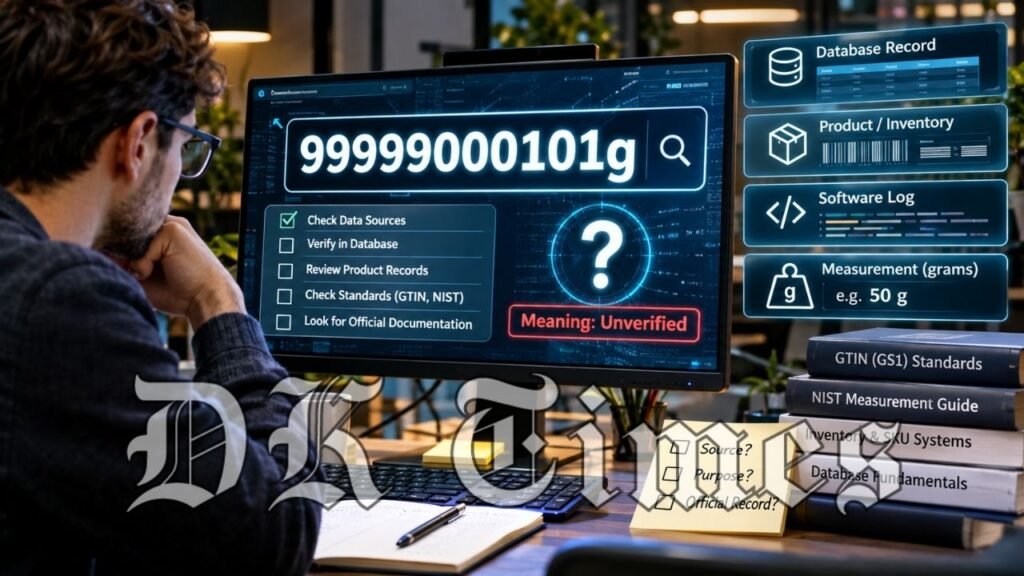
The most useful starting point is the environment where the sequence appeared. A product listing, application interface, financial record, or technical document may provide labels that explain its function.
If the string appears in software, relevant documentation or legitimate support channels may clarify whether it is a reference number or another type of identifier. For inventory-related records, official manufacturer information may be more informative.
Searching for the complete sequence, including its lowercase final letter, helps distinguish exact occurrences from partial matches. Any proposed meaning should also be checked against the relevant technical standard.
An unexplained code should not be treated as proof that a message, transaction, or website is legitimate. Independent verification remains important when the original source is unfamiliar.
Recent Coverage and Remaining Questions
Online articles continued discussing the keyword during 2026, including coverage examining its technical format and uncertain origin.
However, there is no verified evidence connecting the complete sequence to a major software release, product announcement, cybersecurity incident, or regulatory development.
Its creator, introduction date, and intended function remain unidentified. There is also no established connection to a named individual, company, or public project.
Future documentation could clarify its meaning, but current interpretations should remain provisional.
Frequently Asked Questions
What does 99999000101g mean?
99999000101g is a 12-character alphanumeric sequence whose exact meaning, origin, and intended purpose remain unverified.
Is 99999000101g a product identification code?
It could resemble a custom inventory identifier, but no verified product record confirms its use. It is not a valid GS1 GTIN because it contains a letter.
Why does 99999000101g appear online?
Several websites discuss the sequence and suggest possible technical uses, but none has established its original source or function.
Does the letter “g” in 99999000101g mean grams?
The lowercase “g” represents grams in metric measurements, but no reliable evidence confirms that it has this meaning in the sequence.
How can I find the real purpose of 99999000101g?
Check where the code appeared, search for the complete sequence, and consult official documentation from the relevant product, website, or software provider.
Conclusion
99999000101g is a twelve-character alphanumeric sequence whose precise origin and purpose remain unverified. Although its structure resembles identifiers used in inventory management, databases, and software systems, no reliable evidence establishes a specific connection.
Technical standards from organizations such as GS1 and NIST help evaluate possible interpretations, but they do not provide an official definition.
The most dependable approach is to examine where the code appeared, preserve its exact characters, and seek documentation from the original source. Until that evidence becomes available, the sequence should be treated as an unidentified code rather than a confirmed product, measurement, or technical reference.
Head over to DK Times for an in-depth look and to find all the information you need.
